
Deep Seabed Mining
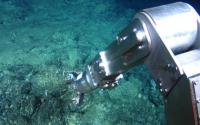
Deep sea mining is a relatively new mineral retrieval process that takes place on the ocean floor. Ocean mining sites are usually around large areas of polymetallic nodules or active and extinct hydrothermal vents at about 1,400 - 3,700 m below the ocean’s surface. The vents create sulfide deposits, which contain valuable metals such as silver, gold, copper, manganese, cobalt, and zinc. The deposits are mined using either hydraulic pumps or bucket systems that take ore to the surface to be processed.
Quicktabs: Keywords
A project to mine undersea iron ore deposits off the New Zealand coast has been rejected because of uncertainty about the environmental effects of the project, the country’s Environmental Protection Authority said on Wednesday.
[ More ]Oceana is calling on EU citizens to help push for the suspension of the European Commission’s plans to develop deep-sea mining operations.
[ More ]The editors argue that "[o]n the evidence of the first response to an application for seabed mining, those seeking consent for economic activity in the 200-mile zone will have to clear a very high hurdle" due to the significant environmental unknowns involved.
[ More ]A new fleet of underwater robots, built outside Newcastle-upon-Tyne in the UK, will dive down to 1,500 metres and claw up the rich minerals and metals carpeting the world’s seafloors.
[ More ]Vast new areas of the ocean floor have been opened up in an accelerating search for valuable minerals including manganese, copper and gold. In a move that brings closer a new era of deep sea mining, the UN's International Seabed Authority (ISA) has issued seven new exploration licences.
[ More ]
New Zealand decides this week whether to approve an underwater iron-ore operation that would likely become the world's first commercial metals mine at the bottom of the sea.
[ More ]
South Korea has secured an exclusive right to explore a vast area of underwater mines in the Indian Ocean, the government said Wednesday.
[ More ]A quiet international rush is under way to stake out seabed claims to valuable minerals, concentrating on the central Pacific. Led by big businesses such as the US defence contractor, Lockheed Martin, it offers the dream of fortunes to poor island nations.
[ More ]Companies are beginning to mine the deep sea for minerals to help power high-tech components found in wind turbines, cellphones and laptops.
[ More ]After years of negotiations and false starts the controversial deep sea mining initiative is close to a breakthrough after a deal was struck with Papua New Guinea.
[ More ]Pages
Lockheed Martin has already sent American jobs outside the U.S. in order to obtain the benefits from ISA Member States.232 As 2018 approaches, the eyes of the world will turn its focus on Nautilus’ attempt to successfully operate the world’s first deep seabed mining operation.233 The success of the Solwara 1 Project will usher in a new era of opportunity for all, excluding non-ratifying States like the U.S.234 The probable response by other U.S. companies would be to follow Lockheed Martin’s footsteps, triggering the trend of utilizing foreign subsidiaries to operate deep seabed mining businesses, to the detriment of the United States.235
Pages
No results for this keyword.