
China
Quicktabs: Keywords
The U.S. military’s effort to keep the Asia-Pacific region stable and secure in the face of a rising China is akin to the 50-year Cold War standoff with the Soviet Union, Defense Secretary Ash Carter said Wednesday. Chinese and U.S. actions and reactions in the South China Sea are just one part of a grand pattern in an era he predicted will end when China changes internally.
[ More ]As an international tribunal prepares to rule on Beijing's territorial claims in the South China Sea, officials in Washington, Tokyo and Southeast Asia are on tenterhooks. Yet, in the words of one senior Chinese official, Beijing does not care.
[ More ]The United States is telling a defiant China that it must follow an international court ruling that rebuked its illegal actions in the South China Sea but China has been quick to point out the obvious hypocrisy in U.S. non-party status to UNCLOS.
[ More ]The United States should ratify the United Nations Convention on the Law of Sea (UNCLOS) in the wake of Manila’s victory over Beijing in The Hague-based Permanent Court of Arbitration (PCA) says one senior Democratic lawmaker. The United States—which acts as the guarantor of the liberal-institutional world order—is notably absent from the treaty—much to the chagrin of executive branch officials.
[ More ]China's leadership is resisting pressure from elements within the military for a more forceful response to an international court ruling against Beijing's claims in the South China Sea, sources said, wary of provoking a clash with the United States.
[ More ]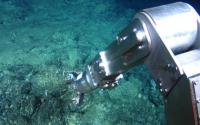
Resource-hungry China is stepping up activity in one of the final frontiers of mineral wealth – the remote seabeds lying kilometres beneath the Indian and Pacific oceans.
[ More ]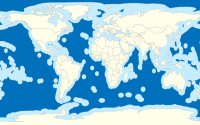
China's Foreign Ministry on Wednesday warned Washington against challenging its sovereignty, responding to reports the United States was planning fresh naval patrols in the disputed South China Sea.
[ More ]U.S. Navy and Pacific Command leaders want to ratchet up potentially provocative operations in the South China Sea by sailing more warships near the increasingly militarized man-made islands that China claims as sovereign territory, according to several Navy officials.
[ More ]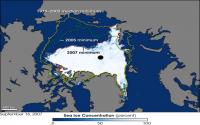
The air pollution that lingered over eastern China for nearly a month in 2013 has been linked to the loss of Arctic sea ice the previous autumn.
[ More ]China has a new generation of stealthy, supersonic anti-ship missiles, and the U.S. is clearly worried about them. Former U.S. rear admiral Eric McVadon described them as the “strategic equivalent of China’s acquiring nuclear weapons in 1964.”
[ More ]Pages
The United States is not a party to the Law of the Sea Convention, but, ironically, we follow it in every respect because we believe it reflects “customary international law”—the law that has built up over the years based on what states actually do in the ocean. So when it comes to exclusive economic zones, the United States interprets the convention (and customary international law) to mean exactly what it says, which is that foreign ships have freedom of navigation in other countries’ exclusive economic zones.
China has a different—and hard to justify—interpretation of the convention. It asserts that it has jurisdiction over all foreign military activity in its exclusive economic zone. Unfortunately, in debates with China and others, the United States is forced to advance our arguments about these issues from a position of weakness. Our encounters with the Chinese on this subject go something like this:
Chinese official: Your Navy ships have no right to be in our exclusive economic zone without our permission.
American official: Yes they do. The U.N. Law of the Sea Convention, which reflects customary international law, provides that other states have freedom of navigation in exclusive economic zones.
Chinese official: You are not a party to convention, so it doesn’t matter what it says—you have no standing to make that argument.
As you can see, our discussions get sidetracked from the real issues into our inexplicable nonparty status. If America ratified the convention, we’d be in a much stronger position to assert our rights and contest China’s anomalous position—that America needs China’s permission for our military assets to travel in, above, and below China’s (substantial) exclusive economic zone, up to 200 miles from its shores.
Here is another critical point: The 163 parties to Law of the Sea Convention could choose to change the convention’s terms at any time. After all, the convention as it stands today is not the same as earlier versions. In fact, there is a marked trend now toward coastal states claiming more jurisdiction over their adjacent waters than the current convention recognizes.
Chances are that any new version of the convention called for by Brazil, China, and other emerging coastal powers would push in favor of a more “Chinese” definition of exclusive economic zone transit rights. They might call for a larger zone with more limited rights for noncoastal states.
That would be a disaster for the United States. America, with the most powerful Navy in the world and trade links that span the globe, needs full freedom of navigation in the world’s oceans. If we do not ratify the Law of the Sea, we will have a very hard time stopping that kind of change, and the longer we wait, the weaker our position will be. We should lock in the beneficial rules—the ones that we helped draft—now.
As it is the United States follows customary maritime law. But customary law can also change over time in ways we cannot control. If the world’s other coastal states such as China start claiming that U.S. military assets can’t transit their exclusive economic zones without permission, that practice could enter customary maritime law. Then the United States would have a hard time arguing that it was going to ignore customary maritime law and instead follow the terms of a treaty that it had never ratified.
China claims as their “historical waters” more than three-fourths of the South China Sea, delineated by the so-called nine–dash line, pictured below.
These claims are generally considered outrageous by everyone except the Chinese, who have kept the justification for them (and the nature of the claims themselves) ambiguous. The Obama administration has done an admirable job of standing with other Southeast Asian countries trying to resist China’s pressure in these territorial disputes. The administration has called for a multilateral process based on the rule of law, rather than the bilateral approach Beijing prefers.
But the U.S. position would be much stronger if the United States could simply say that, “The U.N. Law of the Sea Convention should govern this dispute.” As Secretary of State Hillary Clinton explained in her recent testimony before the Senate Foreign Relations Committee:
I’m sure you have followed the claims countries are making in the South China Sea. Although we do not have territory there, we have vital interests, particularly freedom of navigation. And I can report from the diplomatic trenches that as a party to the convention, we would have greater credibility in invoking the convention’s rules and a greater ability to enforce them.
The Chinese get a lot of mileage in conversations with Southeast Asian nations from the United States not being a party to the convention. (“How can the Americans tell us that Law of Sea Convention applies when they haven’t even ratified it?”) That’s why Secretary Clinton was joined by five Republican predecessors, who penned an op-ed in the Wall Street Journal this past month asking for Senate ratification.
Currently, the State Department's suggestion to the competing claims in the South China Sea is for all of the nations to follow UNCLOS.230 It is hypocritical for the United States to encourage another country to follow UNCLOS without actually acceding to it herself.
Further, China is less likely to listen to the United States from a "position of weakness."231 According to one commentator, conversations between the United States and China regarding foreign military activity in China's EEZ currently look like this:
Chinese official: Your navy ships have no right to be in our exclusive economic zone without our permission.
American official: Yes they do. The U.N. Law of the Sea Convention, which reflects customary international law, provides other states have freedom of navigation in exclusive economic zones.
Chinese official: You are not a party to convention, so it doesn't matter what it says-you have no standing to make that argument.232
If the United States acceded to UNCLOS, then China's response could no longer be, "You are not a party to the convention." Admiral Locklear, the U.S. Navy Commander in the U.S. Pacific Command, has mentioned that in the South China Sea, where "competing claims and counter claims in the maritime domain are becoming more prominent . .. the effectiveness of the U.S. message is somewhat less credible than it might otherwise be, due to the fact that we are not a party to the convention."233 The United States would finally have standing to make the argument that China needs to follow UNCLOS.
Third, American policy makers must realize that the contest for East Asia is one of both power and law. International law supports and legitimizes the exercise of American power. It ensures that the landscape of domestic and international opinion is favorable to american objectives, policies, and actions. International law of the sea in particular, through its assurances of freedom of navigation for security as well as commercial purposes, supports the continued nature of East Asia as a maritime system. International law regarding the free use of international airspace operates similarly. accordingly, to ensure its future position in east asia the United States should take specific actions to defend the international legal architecture pertaining to the maritime and aerial commons. acceding to the United Nations Convention on the law of the sea and once again exercising direct leadership over the development of its rules and norms is the first and most critical step. The Department of State should also reenergize its limits in the seas series to reinforce, publicly and repeatedly, international law related to sea and airspace. a good place to begin the new series would be with a detailed assessment of why international law explicitly rejects China’s “U-shaped line” in the South China Sea as the basis for Chinese jurisdiction there. others could be written to describe why China’s east China sea continental-shelf claim misapplies international law and why China’s ADIZ unlawfully asserts jurisdiction in the airspace. My sense is that East Asian states, indeed many states around the world, are desperate for active american leadership with regard to the norms and laws that govern legitimate international action.
As bad as things are already, they could get worse—particularly if American attention and resolve are in question. In attempting to prevent China from using military force to resolve island and maritime claims disputes in the South China Sea, the United States will increasingly face Beijing’s three-pronged trident designed precisely to preserve such a possibility. Maritime militia and Coast Guard forces will be forward deployed, possibly enveloping disputed features as part of a “Cabbage Strategy”13 that dares the U.S. military to use force against non-military personnel. Such forces would be supported by a deterrent backstop that includes both China’s navy and its “anti-navy” of land-based anti-access/area denial (A2/AD), or “counter-intervention,” forces, collectively deploying the world’s largest arsenal of ballistic and cruise missiles. In the region, only Vietnam also has a maritime militia, and the U.S. Coast Guard is not positioned to oppose China’s. Meanwhile, China’s Coast Guard is already larger than those of all its neighbors combined, and still growing rapidly.14
China recently acknowledged that it too conducts surveillance and marine data collection in the EEZ of foreign states, including the United States.24 On June 1, 2013, at the maritime security session of the Shangri- La Dialogue, high-ranking Chinese military officials confirmed that China has sent its ships into the United States' EEZ.25 U.S. Admiral Samuel Locklear, Commander of U.S. Forces in the Pacific, confirmed that China's Navy has "started 'reciprocating' the US Navy's practice of sending ships and aircraft into the 200-nautical mile zone off China's coast."26 This activity is ironic because China continues to intercept foreign military and fishing vessels, the United States included,27 and attempts to force them to leave.28 In March 2009, for example, a China Maritime Surveillance patrol vessel intercepted the USNS Impeccable, a U.S. Navy vessel,29 while it was conducting a military survey in China's EEZ.30 The Impeccable was radioed by the Chinese patrol vessel and told that it shouldn't be operating "without the permission of the Chinese government."31
Pages
No results for this keyword.