
Deep Seabed Mining
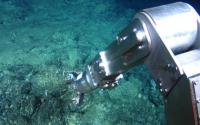
Deep sea mining is a relatively new mineral retrieval process that takes place on the ocean floor. Ocean mining sites are usually around large areas of polymetallic nodules or active and extinct hydrothermal vents at about 1,400 - 3,700 m below the ocean’s surface. The vents create sulfide deposits, which contain valuable metals such as silver, gold, copper, manganese, cobalt, and zinc. The deposits are mined using either hydraulic pumps or bucket systems that take ore to the surface to be processed.
Quicktabs: Keywords
Mining phosphate on the Chatham Rise, off the east coast of New Zealand’s south island, could potentially have many impacts on marine mammals like whales and dolphins, the Environmental Protection Agency was told today.
[ More ]Undersea mining is an entirely new area of exploitation, the effects of which are not fully known. “We know less about the deep sea than we know about the surface of the moon,” says environtmentalist Richard Page. “So this is a big experiment.”
[ More ]Mining phosphate from the seabed of the Chatham Rise would remove a protected coral species crucial to the local ecosystem according to new research.
[ More ]The world’s first deep-sea mine will open in 2018 in the waters off Papua New Guinea, with purpose-built machinery to extract precious metals from the sea bed.
[ More ]
China's deep-sea manned submersible today carried out its first dive in the southwest Indian Ocean to look for deposits of copper, zinc and other precious metals.
[ More ]India, with approval from the International Seabed Authority (ISA), will launch exploration of mineral deposits such as polymetallic sulphides off the coast of Mauritius.
[ More ]Singaporeans and companies based here will have to obtain a licence before mining for minerals in the open sea as the Deep Seabed Mining Bill was passed in Parliament today (12 Feb).
[ More ]
Scientists looking for deep sea organisms on a research cruise last month got a surprise when, instead of deep sea life, they pulled up metal balls the size of softballs. The German researchers stumbled inadvertently onto the discovery of the largest deposit of manganese nodules known to exist in the Atlantic ocean.
[ More ]While deep sea mining is yet to commence in the region, Pacific Island countries are proactively developing legal instruments to ensure appropriate management of their deep sea mineral resources, with particular attention to the protection of the marine environment.
[ More ]The latest setback to seabed mining has alarmed companies in resources extraction. Now they are urging New Zealand government to consider changing law to ensure that it does not block economic development.
[ More ]Pages
No results for this keyword.