
Deep Seabed Mining
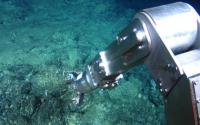
Deep sea mining is a relatively new mineral retrieval process that takes place on the ocean floor. Ocean mining sites are usually around large areas of polymetallic nodules or active and extinct hydrothermal vents at about 1,400 - 3,700 m below the ocean’s surface. The vents create sulfide deposits, which contain valuable metals such as silver, gold, copper, manganese, cobalt, and zinc. The deposits are mined using either hydraulic pumps or bucket systems that take ore to the surface to be processed.
Quicktabs: Keywords
The world’s oceans are poised for a seabed mining frenzy amid a “marine industrial revolution” that threatens to destroy habitats and wipe out species, an expert has warned.
[ More ]
China's 'Jiaolong' deep-sea manned submersible returned from its maiden 118-day exploratory voyage to the Indian Ocean where it is reported to have discovered large deposits of precious metals like gold and silver.
[ More ]
China has come up with a sweetheart deal to break through India's resistance to its attempt to access the Indian Ocean. It is offering India an opportunity to participate in joint seabed mining in the ocean, which has strong potential of yielding expensive minerals.
[ More ]Nonprofit conservation organisation the Center for Biological Diversity has filed a lawsuit against the US Government for permitting controversial large-scale deepsea mining in the Clarion-Clipperton Zone.
[ More ]Deep sea mining could potentially operate with reduced social and environmental impacts compared to those associated with large surface copper mines, according to an independent Environmental and Social Benchmarking Analysis
[ More ]Mining in the deep sea for minerals is uncharted territory, but one company is well on its way to making it a reality. Now, the company is trying to convince skeptical audiences it's a good idea.
[ More ]A group of researchers have called on the International Seabed Authority—which awards mining contracts in international waters—to designate areas as protected habitat in order to counterbalance the negative effects mining operations could have on ocean life.
[ More ]The era of deep seabed mining appears to be dawning, fueled by technological advances in robotics and dwindling land-based deposits. Rising demand for copper, cobalt, gold and the rare earth elements vital in manufacturing smartphones and other high-tech products is causing a prospecting rush to the dark seafloor deep beneath the waves.
[ More ]The author surveys the emerging deep sea mining industry and argues that now is the time to engage and regulate the practice to ensure "the same industrial paradigm that destroyed much of the terrestrial ecosystems of our home planet to do the same in the deep sea."
[ More ]
With land-based mineral sources in decline, the move to mine seabeds is pushing scientists, regulators, and mining companies to collaborate on frameworks and strategies for mining the seabed responsibly.
[ More ]Pages
No results for this keyword.