
Deep Seabed Mining
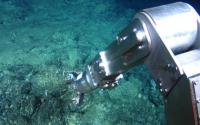
Deep sea mining is a relatively new mineral retrieval process that takes place on the ocean floor. Ocean mining sites are usually around large areas of polymetallic nodules or active and extinct hydrothermal vents at about 1,400 - 3,700 m below the ocean’s surface. The vents create sulfide deposits, which contain valuable metals such as silver, gold, copper, manganese, cobalt, and zinc. The deposits are mined using either hydraulic pumps or bucket systems that take ore to the surface to be processed.
Quicktabs: Keywords
New regulations could open the door for sustainable mining, says the head of the International Seabed Authority. However, he and others pointed to environmental, financial, and technical challenges.
[ More ]Our growing demand for resources has prompted companies to turn to mining in the depths of the oceans. With help from robots, a team of German scientists is racing to map the potential environmental damage.
[ More ]Once thought too expensive and too difficult, commercial scale mining of the deep sea is poised to become a reality as early as 2019. But scientists warn reaching rare minerals on and under the sea floor could cause irreversible damage to an environment that is still poorly understood.
[ More ]Researchers have discovered previously unknown species of sea life on the deep seabed floor, prompting concerns about how they will be impacted by the rush to mine the seabed for cobalt, manganese and other elements for use in technologies such as smartphones and electric cars.
[ More ]Mining interests are racing to extract minerals from the ocean bottom that would be used in batteries for electric vehicles but advocates warn that in addition to its effect on the deep seabed ecosystem, mining could have the counterproductive effect of increasing global warming by releasing carbon stored in deep sea sediments.
[ More ]The International Seabed Authority is preparing to release an 18-year data set showing the environmental impact of deep seabed mining, allowing researchers to assess the effect of mining operations on the deep seabed ecosystem.
[ More ]Plans are advancing to harvest precious ores from the ocean floor, but scientists say that companies have not tested them enough to avoid devastating damage.
[ More ]The authors argue in favor of mining the deep seabed, looking at how it fares comparably to land-based mining and how it will meet demand for key metals for electric vehicles and green technology.
[ More ]An ambitious project to chart the seabed by 2030 could help countries prepare for tsunamis, protect marine habitats and monitor deep-sea mining. But the challenge is unprecedented
[ More ]Researchers caution not enough is known about the effect of deep seabed mining (and the noise and sediment plumes it generates) on the deep midwaters that compromise almost 90% of the biosphere.
[ More ]Pages
No results for this keyword.