
China
Quicktabs: Keywords
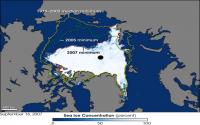
A combined team of researchers from the U.S. and China has projected, using a climate simulation tool, that the Arctic will become September ice-free sometime during the years 2054 to 2058. The group has published a paper describing their methods and findings in Proceedings of the National Academy of Sciences.
[ More ]Last week, the EU, US and Japan formally asked the World Trade Organisation (WTO) to look at China’s export restriction on rare earth metals. Lawyers believe the case will run and run.
[ More ]Rep. Ed Royce (R-CA) today said China and the Philippines should settle a dispute via a measure enshrined in the Law of the Sea treaty, a treaty that his Senate colleagues killed last year.
[ More ]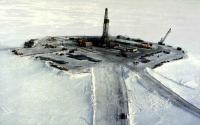
The Arctic may contain 10-15 percent of the world's undiscovered oil reserves, with most of that oil located in the seabed of the Arctic Ocean. And China, thanks to its financial rather than military strength, could take the lion's share.
[ More ]For years, China has criticized the surveillance activities of U.S. naval vessels in its 200 nautical mile exclusive economic zone. Now China has begun, in however small a way, to do the same thing off Guam and Hawaii. And, somewhat counter-intuitively, this may prove to be in the interests of peace, stability and security right across Indo-Pacific Asia.
[ More ]China has secured rights from the International Seabed Authority to explore and mine the seabed and is eager to begin mining operations but currently lacks the technological resources and expertise that its rivals possess.
[ More ]The authors argue that "China is playing fast and loose in claiming rights to territory on and beneath the South China Sea. The United States could help the situation by joining the United Nations Convention on the Law of the Sea."
[ More ]Since 2007, in large part due to aggressive Russian posturing, the Arctic region has become a bone of contention among members of the Arctic Council as well as a subject of international concern. While the signing of the Russo-Norwegian treaty on September 15 put an end to disputes over seabed and maritime borders between two claimants of the region, the Arctic issue has seen the emergence of a critical Asian dimension as it becomes the source of cooperation as well as simmering tension between Russia and China.
[ More ]An ice-free Arctic will not bring more international shipping to Arctic maritime routes to and from China, the world’s largest market, according to a recent study by The Arctic Institute.
[ More ]China’s status as an emerging player in the Arctic took yet another step forward yesterday as officials there marked the official opening of the China-Nordic Arctic Research Centre.
[ More ]Pages
Another area where the United States and China differ is on the establishment of the baselines on which all the maritime regimes are defined. The Convention allows the coastal state to determine its baselines in one of three methods: the low-water line, straight baselines, and archipelagic baselines.29 For coastal states such as China and the United States, UNCLOS declares, "the normal baseline for measuring the breadth of the territorial sea is the low-water line along the Coast."30 UNCLOS allows a coastal state to apply straight baselines to measure the extent of their territorial seas under certain circumstances. These circumstances include: where the coastline is deeply indented and cut into, or if there is a fringe of islands along the coast in its immediate vicinity.31 China, in its 1996 Declaration of the Government of the People's Republic of China on the Baseline of the Territorial Sea, declared straight baselines and promulgated their geographic positions.32 Although the Chinese first claimed straight baselines in the 1958 Declaration on the Territorial Sea and again in the 1992 Law of the People's Republic of China on the Territorial Sea and the Contiguous Zone, the 1996 Declaration was the first time that the Chinese actually specified the geographic coordinates of its straight baseline claims. An analysis of China's baseline claims by the U.S. State Department's Office of Ocean Affairs finds that, "much of China's coastline does not meet either of the two LOS Convention geographic conditions required for applying straight baselines."33 In some areas, the misapplication of the straight baselines allows the Chinese government to excessively claim nearly 2000 square nautical miles as territorial seas that should be regarded as high seas if the baselines were properly drawn.34 The consequence of these straight baseline claims is clear. These straight baselines extend China's territorial, jurisdictional, legal, and economic authorities into the high seas beyond where the Convention intended.
India has joined the race to explore and develop deep-sea mining for rare earth elements — further complicating the geopolitics surrounding untapped sources of valuable minerals beneath the oceans. The country is building a rare-earth mineral processing plant in the east coast state of Orissa and it is spending around US$135 million to buy a new exploration ship and to retool another for sophisticated deep-water exploration off its coast. The Central Indian Basin, for example, is rich in nickel, copper, cobalt and potentially rare-earth minerals, which are highly lucrative and used widely in manufacturing electronics such as mobile phone batteries. They are found in potato-shaped nodules on the deep-sea floor. "These nodules offer a good solution to meeting the nation's demand for metals," C. R. Deepak, head of the deep-sea mining division at the National Institute of Ocean Technology (NIOT), Chennai, told SciDev.Net.
Much attention surrounding the Law of the Sea debate has focused on the Arctic. But the waters that best illustrate the need for an agreed-upon system of rules for the world’s oceans and a U.S. seat at the table are in the South China Sea, where a rising great power, China, decided to assert its maritime claims over smaller neighbors. It did so most aggressively when it submitted the infamous “9-dash line” claim to the United Nations in 2009. That claim has no basis in international law—a fact acknowledged by experts in China—and instead recalls an earlier era when the only rule of international relations was the prerogative of the mighty.
Beijing has walked back its assertive claims. But it did so not because of its ASEAN neighbors’ opposition to the “9-dash line” in May 2009. It did so only when Washington made clear—first with Secretary of State Clinton’s statements at the ASEAN Regional Forum in July 2010 and most recently with President Barack Obama’s appearance at the East Asia Summit last November—that preserving international maritime law, embodied in the Law of the Sea, is a vital U.S. national interest .Without accession, however, the U.S. position is considerably weakened by charges of hypocrisy, a fact not lost on Beijing and of real concern to China’s neighbors who rely on the United States.
The United States need not take a position on the claims of parties in the South China Sea dispute or in any other dispute. It need only ensure that whatever resolutions are reached are within the bounds of international law. If China or any other party is permitted to simply ignore the rules of one facet of the international system—in this case the Law of the Sea—then the entire system loses legitimacy. Commandant of the Coast Guard, Admiral Robert Papp said it best at the same May 9 forum: “Our legitimacy as a sovereign state and as a world leader…rests with the rule of law.”
The Senate should act to assert the national interests of the United States and ratify UNCLOS as soon as possible. Asserting U.S. credibility in the Asia Pacific and globally by standing by the rule of law is in our economic and security interests. In fact, U.S. ratification of UNCLOS will determine whether the twenty-first century resembles the relatively stable order of the late-twentieth century or is more like the competitive free-for-all of the nineteenth.
The proliferation of excessive coastal-state restrictions on military activities in the exclusive economic zone should be a growing concern to all maritime nations. Such restrictions are inconsistent with the 1982 UN Convention on the Law of the Sea and customary international law, and they erode the balance of interests that was carefully crafted during the nine-year negotiations that led to the adoption of UNCLOS. All nations must remain engaged, both domestically and internationally, in preserving operational flexibility and ensuring that the balance of interests reflected in UNCLOS is not eroded any further. The bottom line is that while UNCLOS grants coastal states sovereign rights for the purpose of exploring, exploiting, conserving, and managing the natural resources in the EEZs, it does not authorize them to interfere with legitimate military activities, which include much more than just navigation and overflight. Accordingly, U.S. warships, military aircraft and other sovereign immune ships and aircraft will continue to exercise their rights and freedoms in foreign EEZs, including China’s, in accordance with international law.
Both China and the United States agree that the EP-3E aircraft and the Impeccable were operating outside China's territorial sea but within China's EEZ.184 Despite the unambiguous language of the UNCLOS treaty, China continues to pursue a strategy of gradually extending its strategic depth or sovereignty in order to support offshore defensive operations.185 China's adherence to this flawed legal interpretation, reinforced by aggressive military action, demonstrates that "through an orchestrated program of scholarly articles and symposia, China is working to shape international opinion in favor of [its preferred] interpretation of the Law of the Sea by shifting scholarly views and national perspectives away from long-accepted norms of freedom of navigation and toward interpretations of increased coastal state sovereign authority."186 By doing so, China is not only distorting the settled law of the sea, but perhaps also preparing to deploy a similar strategy in the space domain.
Pages
No results for this keyword.