
Deep Seabed Mining
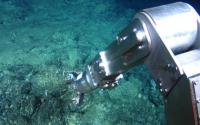
Deep sea mining is a relatively new mineral retrieval process that takes place on the ocean floor. Ocean mining sites are usually around large areas of polymetallic nodules or active and extinct hydrothermal vents at about 1,400 - 3,700 m below the ocean’s surface. The vents create sulfide deposits, which contain valuable metals such as silver, gold, copper, manganese, cobalt, and zinc. The deposits are mined using either hydraulic pumps or bucket systems that take ore to the surface to be processed.
Quicktabs: Keywords
It may be understandable that a terrestrial primate such as ourselves would pay little attention to a world so foreign, inaccessible, and inhospitable as the deep sea, but with growing threats to the region, it's time we do so.
[ More ]Top Pentagon contractor Lockheed Martin is adapting many of the technologies it developed for the government to commercial ventures at sea, including the external fuel-tank technology used on the Space Shuttle.
[ More ]Minerals, such as rare earth metals, are increasingly becoming an important commodity in a resource-constrained world economy. As a result new frontiers both onshore and offshore, to the depths of the ocean, are emerging around the world.
[ More ]The increasing price of precious metals has prompted mineral prospectors to consider unusual places, including a renewed interest in deep seabed mining and the emergence of an asteroid mining industry.
[ More ]
Japan on Saturday said it had won the rights to explore for cobalt-rich crusts in the Pacific, a move that could reduce its dependence on China for rare metals.
[ More ]A new and controversial frontier in mining is opening up as a British firm joins a growing rush to exploit minerals in the depths of the oceans.
[ More ]The Cook Islands hopes to transform itself into one of the world's richest countries within a decade by sending robots to the sea floor to collect minerals that it believes are worth tens of billions of dollars.
[ More ]
China has secured rights from the International Seabed Authority to explore and mine the seabed and is eager to begin mining operations but currently lacks the technological resources and expertise that its rivals possess.
[ More ]For decades, entrepreneurs have tried to strike it rich by gathering up the manganese nodules that carpet the global seabed but until now they have not been able to prove the economic viability of these ventures. The nodules turn out to contain so-called rare-earth minerals — elements that have wide commercial and military application but have hit a production roadblock.
[ More ]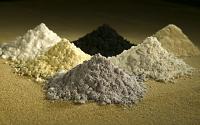
David Cameron has pledged to put Britain at the forefront of a new international seabed mining industry, which he claimed could be worth £40bn to the UK economy over the next 30 years. But the prime minister has chosen an American defence company – Lockheed Martin – to spearhead the drive to collect from the depths of the ocean the copper, nickel and rare earth minerals used in mobile phones and solar panels.
[ More ]Pages
Indeed, this was the U.S. position prior to UNCLOS III. Years earlier, Congress made clear the U.S. position on the legality of deep seabed mining in the Deep Seabed Hard Mineral Resources Act of 1980 (DSHMRA):
[I]t is the legal opinion of the United States that exploration for and commercial recovery of hard mineral resources of the deep seabed are freedoms of the high seas subject to a duty of reason- able regard to the interests of other states in their exercise of those and other freedoms recognized by general principles of international law.10
The U.S. position set forth in 1980 in DSHMRA and again in 1983 at UNCLOS III remains the same today. According to the Restatement of the Law, Third, of the Foreign Relations Law of the United States, U.S. citizens and corporations may engage in seabed mining regardless of whether the U.S. accedes to UNCLOS, provided that they conduct such mining without claiming sovereignty over any part of the seabed and as long as the mining activities are exercised with due regard to the rights of other nations engaged in mining.11 As related by the Restatement, “like the fish of the high seas the minerals of the deep sea-bed are open to anyone to take.”12
However, most businessmen understand that it makes little difference whether or not, say, Congo, recognizes their right to harvest manganese nodules in the Pacific. Indeed, given the dynamics of seabed mining, it probably doesn’t even matter if other industrialized nations with firms capable of mining the ocean floor recognize one’s claim. In all but the most unusual cases, the seabed’s irregular geography and surplus of nodules make “poaching” uneconomical—it would make more sense to develop a new site than to attempt to overrun someone else’s.
One reason massive-sulphide formations beguile miners is that the metals they contain—notably copper, gold, zinc and silver—are highly concentrated. Another is that they are often big, 200 metres wide and long, tens of metres thick, and may contain several million tonnes of ore. All lie on the surface of the seabed, and many are only 1-2km below water level. At that depth technology developed for the offshore oil industry can nowadays be employed for mining. In particular, the deep-water pumps and suction pipes developed to bring subsea oil up to the surface can be used in the riser pipes needed to bring minerals (mixed with water) up from a massive-sulphide mine. The oil industry has also developed remotely-operated vehicles to make trenches for seabed pipelines, which can be adapted for cutting ore, even though it may lie much deeper, at, say, 1.5km down. In general the technology in the machines needed to carry out deep-water mining is no longer exotic. Woods Hole Oceanographic Institution has a vehicle that can reach depths of 11km.
Moreover, mining companies much prefer the known difficulties of operating on land to those of operating on the seabed. The risks of working in a place where volcanic activity seems to have stopped but may suddenly resume are uncertain. So indeed are the possible obligations to repair the underwater environment: no legal codes are yet in place for deep-sea mining. That helps to explain why the only places in which companies have dipped more than a toe in the water are in exclusive economic zones, which are not just shallower than many parts of the distant ocean but also within the legal ambit of a national authority.
Seafloor mining beyond countries' territorial waters is regulated by the International Seabed Authority, set up under the United Nations Convention on the Law of the Sea. So far it has issued only eight licences, all for exploration, not production, all for nodules, not massive-sulphide deposits, and all to governmental or quasi-governmental agencies (of China, France, Germany, India, Japan, Russia, South Korea and an east European consortium). No wonder. Commercial miners want both a clear title to their holding and exclusive rights to exploit it. They also have to answer to shareholders.
The taxation objection made by opponents is often coupled with an argument that US companies that had invested millions of dollars in exploration costs would lose their existing claims under US law. This argument ignores the fact that the 1994 Agreement grandfathers these holders into the treaty regime based on arrangements no less favorable than those granted to holders of claims already registered with the Authority upon certification by the US government and the payment of a $250,000 application fee (a fee that is half of the fee established in the 1982 Convention). As Ambassador Colson pointed out in the 1994 hearings, "If the U.S. does not become Party to the Convention, international recognition of the rights of the U.S. licensed consortia could be jeopardized."
There are many misconceptions as to what the signing of UNCLOS would mean for the United States and deep seabed mining. It is argued that by ratifying UNCLOS, including the Agreement, states will inevitably have to discontinue their unilateral attempts at deep seabed mining.133 However, this is unfounded as the law of the deep seabed was intentionally not settled in order to produce solid negotiations of the sort that resulted in UNCLOS.134 Most, if not all, of the potential deep seabed mining nations are dedicated to the adoption of UNCLOS and the Agreement.135 The potential deep seabed mining countries understand that there is a lack of economic viability in the present deep seabed mining industry, and "it is inconceivable that the necessary financial markets would support unilateral mining if it is contrary to the principles" of UNCLOS.
Our economy is hurt when delimitation of our extended continental shelf is delayed and when legal uncertainties from non-membership prevent our oil and gas industry from exploiting the rich continental margin, especially in the Arctic. Development of resources in the Chukchi and Beaufort Seas off Alaska's coast would create approximately 54,700 jobs per year nationwide with a $145 billion payroll and would generate $193 billion in federal, state and local revenue according to a study done by the University of Alaska's Institute of Social and Economic Research.
The delay in ratifying this treaty has already cost the loss of one of our four seabed mine sites, the richest in the world, and if we do not soon adhere the United States risks losing the remaining three, with billions in the strategic minerals manganese, copper, cobalt and nickel at stake. A single seabed mining operation would spur the economy with total capital purchases of close to one and a half billion dollars and would stimulate robust job creation. Further, for our nation to lose this new industry would cost millions in consumer losses and foregone tax revenues and billions in our balance of trade as the United States was forced to import rather than produce these strategic minerals.
Undersea cables carry more than 95% of international Internet and telephonic transmissions. These crucial cables also transmit financial data and transactions worth trillions every day. The Convention establishes the legal underpinning for protecting and managing these cables. At a National Press Club event a spokesman for AT&T warned that not being a party places America's crucial communication links at risk.
A growing number of companies and governments2 – including Canada, Japan, South Korea, China and the UK – are currently rushing to claim rights to explore and exploit minerals found in and on the seabed, such as copper, manganese, cobalt and rare earth metals. There are currently 17 exploration contracts3 for the seabed that lies beyond national jurisdiction in the deep seas of the Pacific, Atlantic and Indian oceans, compared with only 8 contracts in 2010. Contract holders will be able to apply for licences to carry out commercial mining in the high seas as soon as regulations for exploitation are developed – anticipated as early as 2016.4 There is also significant exploration interest within national waters, particularly in the Pacific Ocean, and one licence to mine the deep seabed has already been granted in Papua New Guinean waters. However, very little is known about deep-sea habitats, or the impact that mining operations will have on ecosystems and the wider functioning of our oceans. Once thought to be relatively lifeless, scientists now recognise that the deep sea is actually a species-rich environment5, with many species still to be discovered. Because deep-sea species live in rarely disturbed environments and tend to be slow growing and late maturing, with some unique to their particular habitat types (such as hydrothermal vents) or even specific locations, they are highly vulnerable to disturbance or even extinction.6
The world economy, still suffering from the financial crisis, is currently experiencing increasing commodity prices. Industrial associations and governments are monitoring patterns of supply and demand, not only for standard minerals like iron, but also for high-value metals (e.g., nickel, copper, titanium, gold) and rare earth elements (REE) like yttrium, indium, gallium, neodymium, and germanium (Kato et al. 2011) which are important for semi-conductors, photovoltaics, lasers, liquid crystal displays, fiber- optic cables, and other high-tech products used in both civilian and military applica- tions. The demand for raw materials is expected to double in the next 25 years. The EU has identified a list of 14 out of 41 critical raw materials2 which are irreplaceable in key industries. The supply risk is due to the fact that a high share of production comes from China,3 Russia, South Africa, the Democratic Republic of Congo, and Brazil. This production concentration cannot easily be substituted for or augmented by other sources. The political–economic stability of some of the producing states is questionable and, in the case of Congo, nearing collapse. The list of failing states will grow where humanitarian and environmental risks may get completely out of control. The risks for the supply chains are self-evident: old and newly industrialized states are competing over prices and access rights to the remaining raw materials, while the low-hanging fruits have been picked. As a consequence, interest in marine mineral resources is growing again. With only 29% of the world's surface being land and 71% being sea, there is every reason to believe that terrestrial minerals occur in deposits on and in the seabed, as well. The Pacific Ocean alone is larger than all land masses on earth.
Pages
No results for this keyword.